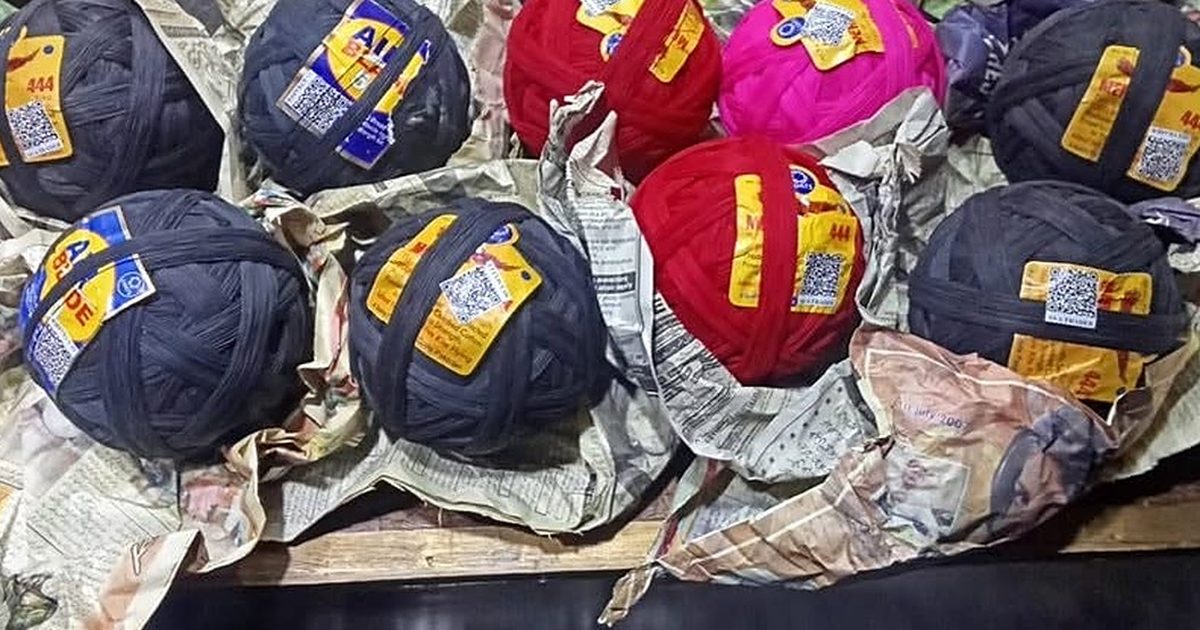
Most people who fly on 12 March will have bought in January or February, and some will buy earlier than that — selling is paused at the moment, and when it reopens the sensible move is to buy rather than to wait. Which creates a problem nobody thinks about until the morning of the festival: three months in a Lahore house is long enough to ruin a kite.
Paper, bamboo and cotton are all organic, all hygroscopic and all cheap, so nobody treats them carefully. A kite that has spent the winter under a stack of quilts is not a kite any more, and a pinna that has been squashed in a damp cupboard will come off the spool in handfuls.
What actually goes wrong
Paper slackens, then warps. Kite paper takes up moisture out of the air and goes limp, then dries unevenly and pulls the frame out of true. A kite that has been through two or three damp-and-dry cycles sits crooked in the air no matter how you adjust the kanni.
Sun makes it brittle. Paper left where daylight reaches it fades and loses flexibility. The tear then starts at the first gust rather than the tenth pech.
Pressure becomes a crease, and a crease becomes a tear. Any weight on a stacked kite leaves a line across the paper, and the line fails at the first hard pull. This is the most common single cause of a dead kite in storage, and it is entirely avoidable.
The frame takes a set. The spine and the kamaan are bamboo. Stored bent, or with something leaning on them, they keep the bend — and a kamaan with an uneven curve makes a kite that insists on turning one way. Stored too dry for too long, very thin bamboo splits.
Glue joints let go in damp. Where the paper meets the spine and the bow is the first thing to lift in humidity. Worth looking at before you look at anything else.
Cotton dor loses strength when damp, and smells of it. Mildew in cotton is both a smell and a real loss of breaking strength, which you discover at the worst moment. Grit and dust worked into line abrades it from the inside out.
A squashed pinna tangles. The whole value of the pinna is that it pays out cleanly. Deform the ball under weight and the windings bite into each other; then it comes off in loops and knots, and half of it is wasted.
Where to put it
Kites: flat, dark, dry, and with nothing on top. In order of preference:
- Flat on the top shelf of a cupboard, where nothing gets stacked on them and the floor's damp cannot reach them.
- Flat on top of a wardrobe, interleaved with a sheet of newspaper between each one so the papers do not stick to each other.
- On edge, supported upright behind a cupboard or against a wall, if you have no flat space. Vertical is fine; leaning at an angle under their own weight is not.
Keep them in the paper sleeve they came in if there is one. Away from exterior walls that sweat in winter, away from the kitchen, away from the bathroom wall. Not in a sealed plastic bag — plastic traps whatever moisture is already in the paper and holds it against it for three months.
Pinnay: loose, in cloth or cardboard. A cloth bag or an open cardboard box, not compressed, not at the bottom of anything. Off the floor. And keep the label facing out and readable: the QR code on a lawful pinna is your evidence that the line is what it says it is, and a rubbed-off label is a conversation you do not want to have on a roof.
Gloves and tape: somewhere cool. Tape loses its tack in heat and a roll that has sat on a sunny shelf will not hold a repair. Gloves just need to be findable, which in practice means in the same box as everything else.
One box for all of it. The reason is not tidiness. It is that on the morning of 12 March you want to carry one box up the stairs and not make four trips while other people are already flying.
The one thing never to store
Metallic wire and chemically coated line. Not in the house, not in the shop, not "left over from before". Under the Punjab Kite Flying Act 2025, manufacturing, storing or selling prohibited material carries five to seven years and a fine measured in millions — a heavier penalty than flying it. Storage is a named offence, and a spool at the back of a cupboard is storage.
If there is old maanjha in your house from the years before the ban, the correct thing to do with it is get rid of it, not inherit it. How to recognise it is worth reading before you decide a spool is "probably cotton".
The ten-minute check, a week before
Not on the morning. A week before, while a replacement can still be bought.
Hold each kite up to a window. Pinholes and thin patches show as bright spots. A few are nothing; a constellation of them along a fold is a kite to retire.
Press the paper near the spine. If it crackles like a dry leaf, it has been in sun. If it feels soft and cool, it has been in damp. Neither is fatal on its own; both together are.
Flex the spine and the kamaan gently. You are checking for a crack and for an uneven curve. A cracked spine is finished — do not take it up and hope.
Run a thumbnail along the glued edges. Any lifting, re-glue it now.
Check the kanni knots. Old knots tighten and old thread goes stiff. Re-tie anything you are unsure of.
Pull a metre of dor between your hands. It should snap clean and bright, not fluff or part softly. Smell it: mildew is unmistakable. Unwind the outer few metres of each pinna and discard them — that is the part that has done the weathering.
What a roof gets through in a day is worth comparing against what survived, because the week before is when a shortfall is still fixable.
Between seasons
For anything you want to keep until 2028: the same rules, plus two.
Separate the survivors from the walking wounded and label the box. Next year you will not remember which stack was already patched.
Do not keep line you have already flown a full festival on. It has been through pech, it has been down on a street, it has had grit in it. It costs a fraction of the day to replace and it is the component that fails under load.
Frequently asked
How should kites be stored before Basant?
Flat, in the dark, somewhere dry, with nothing stacked on top — the top shelf of a cupboard or the top of a wardrobe, with newspaper between each kite. Upright and properly supported is also fine. Avoid sealed plastic bags, damp exterior walls, direct sunlight and floors.
Can kites be stored rolled up?
No. Rolling creases the paper and puts a set into the bamboo spine and kamaan, and both are permanent. Flat or supported upright are the only two safe positions.
How do you keep kite dor from going bad?
Keep pinnay loose in a cloth bag or an open cardboard box, off the floor, away from damp, and never under weight. Compression makes the windings bite and the line comes off tangled; damp brings mildew, which costs real breaking strength.
How long can kites be kept?
Years, if they are kept flat, dry and dark — people fly kites bought seasons earlier. What kills them is not time but pressure, sunlight and damp-and-dry cycling. Check the paper against a window and flex the frame before the day rather than on it.
Is it illegal to store old metallic kite string?
Yes. Under the Punjab Kite Flying Act 2025, manufacturing, storing or selling prohibited material carries five to seven years' imprisonment and a fine in the millions. Storing it is a named offence, so old maanjha in a cupboard is not a neutral object.
Kites, dor and everything that goes with them
Kites by the tawa grade, 100% cotton dor on QR-coded pinnay, gloves and tape — all sold singly from Lahore at a published price, delivered by our own rider. See the products and prices.
Selling is paused while our registration is suspended by the Punjab Government — see the notice. The products and prices stay published so you can plan, and we answer questions either way.
- Patang & gudda
- Cotton dor
- Pinnay
- Gloves
- Tape
- Delivery in Lahore