Chemical dor and manjha are the reason Basant was banned for nearly twenty years. Both are still made, both are still sold, and people still search for their price. For 2027 both are banned outright, and flying either carries three to five years.
This page is about recognising coated line when it is offered to you. The positive rule — what legal dor is — sits on the dor rules page, and the penalties in full are on the Kite Flying Act page.
What the words mean
Manjha (مانجھا), sometimes written manja or manjha, is line coated to cut. The traditional coating is powdered glass bound with rice paste and gum. In Pakistan the word almost always means coated line, not plain dor.
Chemical dor is line treated with a chemical or synthetic coating for the same purpose. Some of it is nylon underneath, which is banned in its own right because it does not break.
Dor (ڈور) on its own just means kite line. Legal dor is plain cotton.
Why coated line is banned
Because it does not stop at the other kite. A coated line crossing a road at neck height cuts whatever it meets, and nylon underneath means it does not snap when it does. Motorcyclists and pillion riders were the people it killed, which is the history behind the ban.
How to spot it
By the pitch. Anything sold on the basis that it cuts better. "Tez", "sharp", "glass wali", "chemical wali", "fighting dor" — the sales pitch is the fastest test there is.
By the look. A glassy or glittery sheen. Uneven colour along the line. Line that looks stiff rather than soft.
By the feel. Run a short length between gloved fingers. Cotton is slightly rough and slightly giving. Coated line feels gritty and stiff. Nylon feels smooth and slippery and stretches.
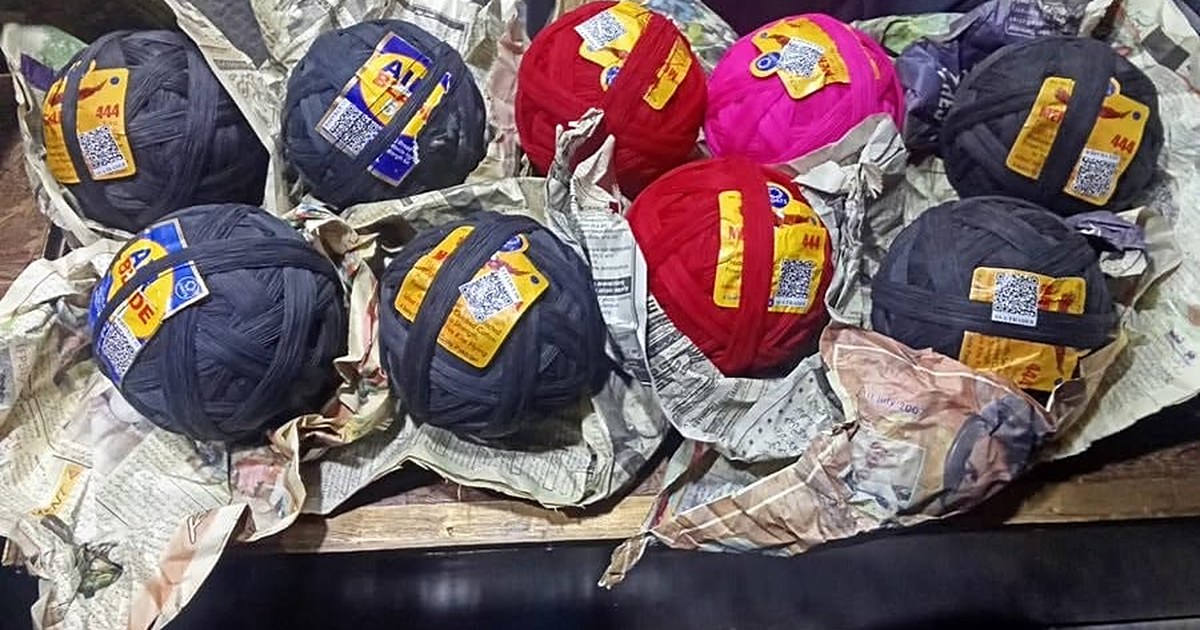
By the format. Legal dor is a pinna with a QR code. Line on a spool or a charkhi, or a pinna with no code, has no lawful provenance. Charkhi are banned and the QR code is how you check.
By the price. Unusually cheap dor is almost never efficiency.
What it costs you
The buyer is not a bystander. Under the Punjab Regulation of Kite Flying Act 2025:
| Offence | Penalty |
|---|---|
| Flying with prohibited string | 3–5 years and/or fine up to Rs 2 million |
| Making, storing or selling prohibited string | 5–7 years and/or fine up to Rs 5 million |
The offences are cognizable and non-bailable, and police of sub-inspector rank can arrest without a warrant. Lahore police have been seizing banned string through September, including nine spools in a single New Anarkali case.
If someone on your roof has it
Do not fly it, and do not let anyone else fly it from your roof. The offence is flying it, and it belongs to whoever is holding the line. The rooftop SOPs cover what else a roof must get right.
In the market it is rarely called "chemical" to your face. Listen for the euphemisms: dor described as "fighting wali", "tez", "pakki", "imported", or as something that "never loses a pech". Any of those, attached to line that is not on a QR-coded pinna, is a reason to walk away.
Frequently asked
What is chemical dor?
Kite line coated with a chemical or synthetic finish so it cuts. It is banned for Basant 2027.
What is manjha?
Line coated to cut, traditionally with powdered glass bound with rice paste and gum. In Pakistan the word almost always means coated line, and it is banned.
What is the price of chemical dor in Pakistan?
It has no lawful price: making, selling or flying it is an offence. Flying it carries three to five years and a fine of up to Rs 2 million.
How can I tell if dor is chemical?
Look for a glassy sheen and uneven colour, feel for grit or stiffness, and check for a QR-coded pinna. Any sales pitch about cutting power is the clearest sign.
What is legal kite string for Basant 2027?
Plain cotton, 9 tar at most, 28 count at least, wound as a pinna with a QR code from a registered manufacturer.
Kites, dor and everything that goes with them
Everything we supply is plain cotton dor on QR-coded pinnay — a 2-piece pinna is Rs 8,000. We do not sell charkhis or coated line. Gloves are Rs 750 per person. See the products and prices.
Selling is paused while our registration is suspended by the Punjab Government — see the notice. The products and prices stay published so you can plan, and we answer questions either way.
- Patang & gudda
- Cotton dor
- Pinnay
- Gloves
- Tape
- Delivery in Lahore