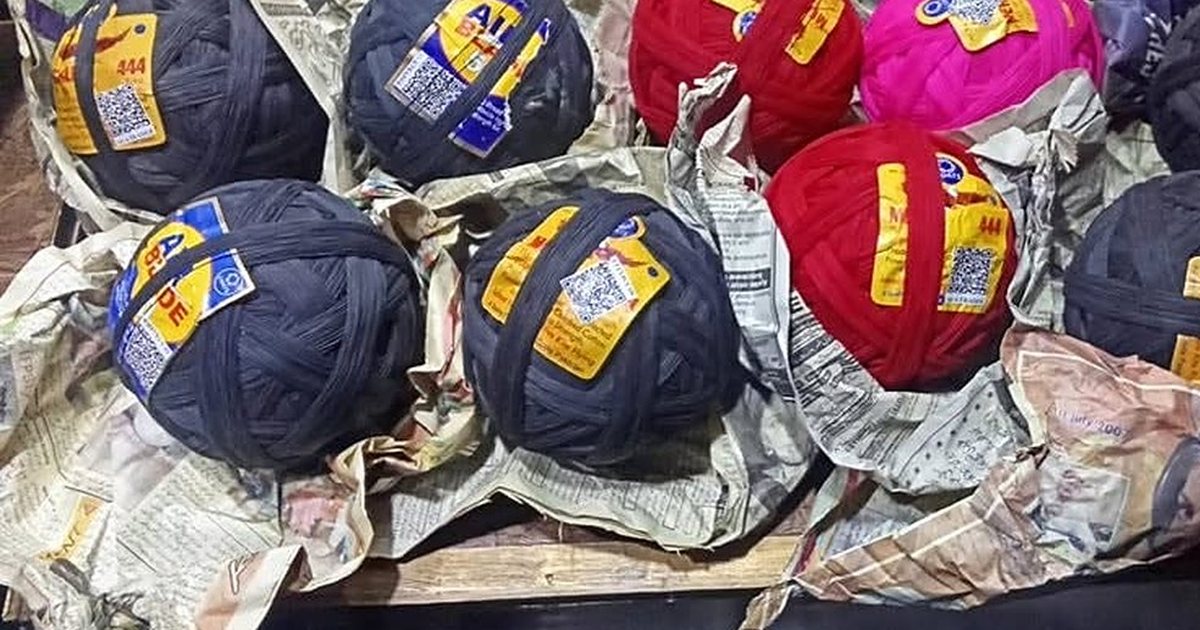
There are two different checks a buyer has to make for Basant 2027, and doing one does not cover the other. The first is whether the seller is registered — that has its own page. The second is whether the product in your hand is the traceable, lawful article, and that is what the QR code is for.
A registered seller can still hand you an unmarked pinna. The sticker is the part that follows the goods.
What the QR code actually is
Under the 2027 framework, cotton string is wound into round pinna form and each pinna carries a QR code, so that a specific ball of line can be tracked from the manufacturer who made it, to the seller who stocked it, to the buyer who bought it.
That is a supply-chain control, not a quality mark. It is worth being precise about what it does and does not tell you:
What it proves. That this pinna entered the system through a registered manufacturer and was recorded on the way to you. It is the link that makes chemical or metallic string a traceable offence rather than an anonymous one.
What it does not prove. That the line is any good. Tar count, winding quality, how much line is actually on the ball — none of that is in the code. That is what the dor grading page is for, and what the 9 tar and 28 count specification sets as the floor.
Where lawful dor comes from now
The traceability chain starts a long way upstream, and 2027 is the first year it is mapped.
Manufacturing is restricted to registered manufacturers, who had to register from 5 September 2026 and obtain an NOC before beginning production. For Lahore, the district administration has proposed five designated zones for kite-string production — Manawan Sports Complex, LDA City Nishter, Raiwind Market, Rakh Tehra in Cantonment Tehsil, and Saggian Bridge on the Ravi — with somewhere around 500 to 600 points across those locations.
Sellers, traders and associations are a later phase: their registration is expected to open in January or February 2027, with the exact date still to be announced.
The practical consequence for a buyer is a timing one. For much of the run-up, the people lawfully permitted to make dor are registered and the people selling it to you may not be registered yet. That is a gap in the calendar, not a loophole, and it is why the QR code on the goods matters more than usual this season.
How to check at the point of sale
Four things, in about a minute:
- Find the code. It is on the pinna's wrapper. If you cannot see one, that is your answer.
- Scan it. Any phone camera. It should resolve to a record, not to nothing and not to a generic page.
- Read what comes back. You are looking for it to identify this product and a registered manufacturer. A code that scans to a blank, an error, or somebody's homepage is not a traceability record.
- Check the physical thing too. A QR sticker is a sticker. It belongs on a ball of plain cotton wound as a pinna, with no charkhi, and the line should look and feel like cotton — not glassy, not stiff, no metallic glint.
The last step matters because the easiest fraud is the obvious one: a genuine sticker on the wrong goods.
What to do if there is no QR code
Walk away, and understand why rather than just taking the rule on faith.
Unmarked line is line with no traceable origin, which in practice means it was not made by a registered manufacturer under the scheme — and the whole point of restricting manufacture was to keep chemical and metallic string out of the supply. The penalties under the Punjab Regulation of Kite Flying Act 2025 are severe, and they attach to possession and use, not only to manufacture.
There is also the plain safety arithmetic. Chemical-coated line is what turns a cut across a rider's neck into a fatal one. The traceability scheme exists because of a casualty record, not because of paperwork.
Our registration status
Our published 2-piece pinna is plain cotton, inside the 9 tar and 28 count limits, wound as a QR-coded pinna with no charkhi — it is listed with everything else.
Selling is paused: our own registration certificate for 2026 has been suspended by the Punjab Government and no sale is lawful until it is reissued. We say so on the notice rather than quietly taking orders, and we would rather you checked our status than took our word for it.
Frequently asked
What is the QR code on kite string for?
It makes each pinna traceable from the manufacturer who made it, through the seller, to the buyer — so that unlawful string has an origin that can be found.
How do I check a kite QR code?
Scan it with any phone camera and check that it resolves to a record identifying that product and a registered manufacturer. Then check the line itself is plain cotton wound as a pinna.
Does a QR code mean the dor is good quality?
No. It is a traceability mark, not a quality mark. Tar, count, length and winding quality are separate questions.
What if the pinna has no QR code?
Do not buy it. Unmarked line has no traceable origin, which is the whole thing the scheme exists to prevent, and the penalties attach to use and possession too.
Where is legal kite string made in Lahore?
Manufacturing is restricted to registered manufacturers. For Lahore, five zones have been proposed — Manawan Sports Complex, LDA City Nishter, Raiwind Market, Rakh Tehra and Saggian Bridge.
When can sellers register?
Manufacturer registration opened on 5 September 2026. Sellers, traders and associations are expected to register in January or February 2027, with the date still to be announced.
Kites, dor and everything that goes with them
Everything sold singly from Lahore at a published price — kites by the tawa grade, 100% cotton dor on QR-coded pinnay, and the gloves and tape that go with them. See the products and prices.
Selling is paused while our registration is suspended by the Punjab Government — see the notice. The products and prices stay published so you can plan, and we answer questions either way.
- Patang & gudda
- Cotton dor
- Pinnay
- Gloves
- Tape
- Delivery in Lahore