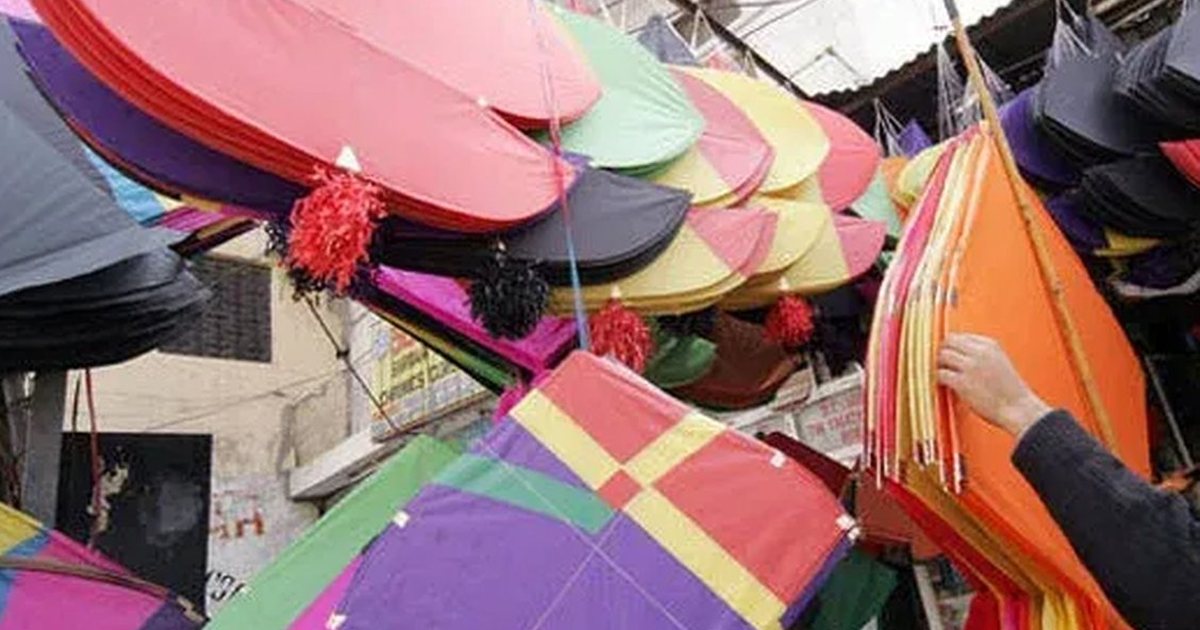
A kite is two materials: thin paper and split bamboo. Their price is what most of a kite's price is made of, and it is why two guddas at the same size can be a hundred rupees apart.
This page is for people pricing the materials — to make kites, repair them, or understand what they are paying for in a finished one. Finished kite prices are on the kite price in Lahore page.
Kite paper
Kite paper is a thin, light, strong tissue that holds its shape under wind. In the trade you will hear it called by type and origin — "German paper" is the name people search for most — and it is sold by the sheet or the ream in solid colours.
What sets the price:
- Weight and strength. Lighter paper flies in less wind; paper that is too weak tears at the first gust.
- Colour. Solid, even colour costs more than blotchy stock.
- Condition. Creases do not come out, and a creased sheet makes a kite that flies crooked.
- Season. Prices climb in the weeks before Basant, as they do for everything else.
There is no published rate list for kite paper in Pakistan, and prices change through the season, so treat any figure you are quoted as a seller's price, not a standard one. What you can compare is what you are getting for it:
| What to ask | Why it matters |
|---|---|
| Sheet size | Common kite paper sheets are around 20 × 30 inches (about 50 × 75 cm); a gudda needs more paper than a patang |
| Weight (GSM) | Kite tissue is typically around 24–25 GSM — light enough to fly, strong enough to hold |
| Pack size | Paper is usually sold in packs or reams; per-sheet price falls sharply in bulk |
| Colours | Assorted packs cost less per sheet than a single colour in quantity |
Online marketplaces list kite paper packs, and the same cautions apply to buying there as to buying dor.
Kite sticks
Kite sticks are split bamboo: a straight spine and a bent cross-spar, the kamaan, that gives the kite its bow.
What sets the price:
- Straightness. A bowed spine makes a kite that pulls to one side. Sight down it.
- Even thickness. The kamaan has to bend evenly on both sides or the kite will not balance.
- Dryness. Green bamboo warps as it dries.
- Length. Longer sticks for guddas cost more than patang sticks.
In the traditional fighter kite, the frame has named parts: the pair of equal sticks that form the upper bow is the kamaan jodi, and it is these sticks that set the size of the kite. They are peeled so the centre stays thicker than the ends, which is what lets them bend evenly without snapping. When you buy sticks, you are really buying that peel: a kamaan that is thick in the wrong place will never balance.
As with paper, there is no standard rate. Sticks are sold singly and in sets, and prices depend on length, finish and whether they are already peeled.
The rules if you make kites
Making kites to sell is regulated. Manufacturers of kites and kite-flying material register on the Basant 2027 portal and need a no-objection certificate before production begins, and the registration page covers who must register and when. Selling kites without registration is an offence under the Kite Flying Act 2025.
Size limits apply to every kite, whoever made it: 35 × 30 inches for a patang and 40 × 34 inches for a gudda. How to measure.
Making versus buying
For a roof, buying is almost always cheaper once you count the kites that do not fly. Making a kite that balances takes practice, and the material cost is only part of it. How a kite is made covers the craft.
Frequently asked
What paper is used for kites?
A thin, light, strong tissue that holds its shape in wind. "German paper" is the name most people search for.
What are kite sticks made of?
Split bamboo: a straight spine and a bent cross-spar called the kamaan.
What decides the price of kite paper?
Weight and strength, even colour, condition and season. Prices rise in the weeks before Basant.
Do I need a licence to make kites?
To make them for sale, yes: manufacturers register on the Basant 2027 portal and need a no-objection certificate. Every kite must be within the legal size limits.
Kites, dor and everything that goes with them
The 1 tawa gudda is Rs 350 and the 1.5 tawa is Rs 450, both sold singly and inside the legal size limits. See the products and prices.
Selling is paused while our registration is suspended by the Punjab Government — see the notice. The products and prices stay published so you can plan, and we answer questions either way.
- Patang & gudda
- Cotton dor
- Pinnay
- Gloves
- Tape
- Delivery in Lahore