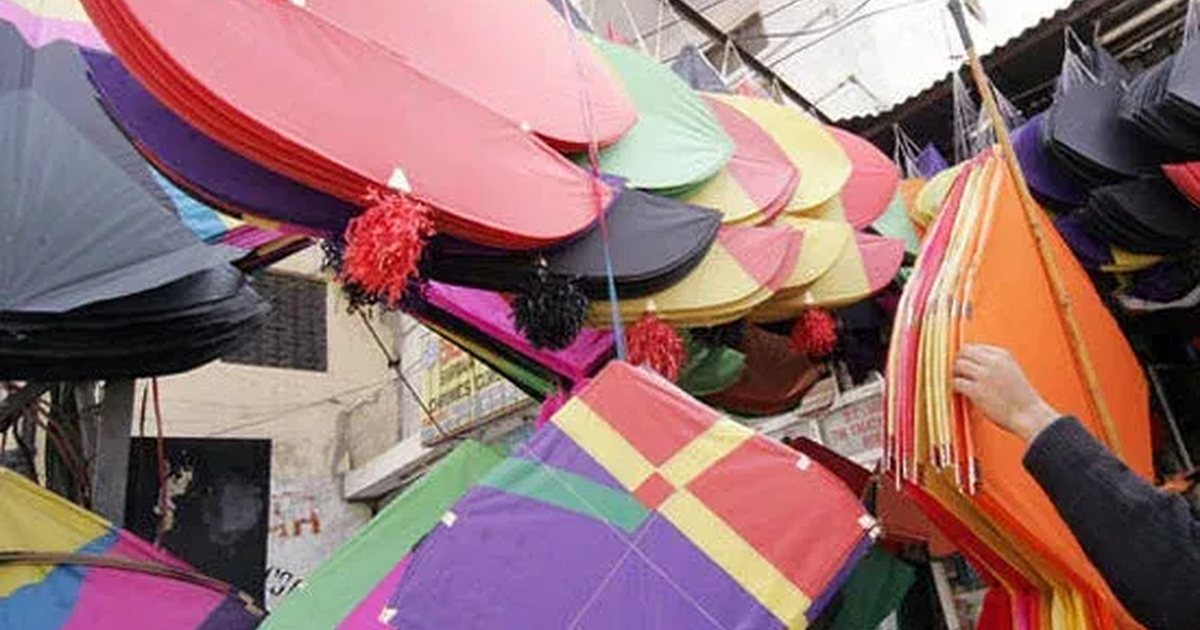
Lahore's kite trade has always had geography. It concentrated in particular quarters, ran through families rather than brands, and peaked so hard in the fortnight before Basant that the rest of the year barely registered. Licensing has changed who may sell. It has not moved the map very much.
Mochi Gate and the Walled City
The historic centre of the trade sits in and around the Walled City. Mochi Gate is the name most people reach for, and with reason — kite making, paper supply and string winding have been neighbourhood crafts in those quarters for generations. Misri Shah, Shad Bagh and Baghbanpura carry the same history.
If you want to understand how a kite is actually built rather than simply buy one, this is the part of the city to walk. It is also, in season, extremely crowded, which is an argument for going early rather than in Basant week.
What licensing changed — and un-changed
An early plan under the new framework would have confined kite and string manufacturing to five designated zones, the Walled City, Misri Shah, Shad Bagh and Baghbanpura among them. That restriction was withdrawn on 5 September 2026. Licensed manufacturers may now produce anywhere in Lahore, at the approved address on their registration.
The practical effect is that the historic quarters remain the centre of gravity by tradition and skill rather than by law, and that a registered maker in another part of the city is equally legitimate. What has genuinely changed is that the free-for-all of the pre-ban years is gone: manufacturing requires registration and an NOC, production is uploaded to the Basant Festival 2027 portal as it happens, and premises are subject to inspection.
What a physical shop tells you
The case for buying in person has less to do with price than with things a listing cannot show.
You can feel the dor. Cotton has a specific hand — slightly rough, slightly giving. Coated line feels gritty and stiff. Anyone who has held both can tell them apart instantly, and no photograph conveys it. This is the single best reason to buy in person at least once before you ever buy online.
You can check the QR code. Legal pinna carry one. In a shop you can look at it before money changes hands.
You can see the certificate. Registered premises are required to display their certification prominently. A shop that has one will have it up; a shop that does not will have an explanation, and the explanation is the information.
You can judge the stock. Kites stored badly warp. Paper that has sat in damp goes soft at the edges and tears on the first real pull. Five seconds of looking tells you.
Someone will argue with you — in the best sense. A shopkeeper who tells you the size you asked for is wrong for your roof is giving you something no checkout flow will.
If you do only one thing in person: handle the dor before committing to a season's worth of it. Everything else you can reasonably judge from a distance. That, you cannot.
Collection points
A pattern that emerged with the regulated festival is the collection point — a registered seller with a fixed Lahore address where orders are handed over, rather than a traditional open shopfront. It is partly practical and partly regulatory: one monitored location is far easier to operate compliantly than a stall that appears for a fortnight.
For a buyer it works much like a shop, with one difference: you arrange it first rather than browsing. Ask what you may inspect at handover, and whether you can decline on the spot if something is not as described.
Timing matters more than location
Where you buy matters less than when. The trade compresses almost the whole season into the final fortnight, and the last days before the festival are the worst possible time to be making decisions — stock thins, queues form, and the careful conversation you wanted is not available at any price.
The retail window is now officially bounded rather than open-ended, which sharpens this further. Watch the portal for when it opens, and see how prices move through the season.
Outside Lahore
There is real demand in Rawalpindi, Peshawar, Haripur and Faisalabad, and established markets in several of them. We do not cover them, because we deliver within Lahore only, and a shop that ranks for a city it cannot serve wastes your time.
If you are outside Lahore, buy from a registered local seller and apply the same checks: how to verify any seller.
Before you go
- Know your roof — wall height, and the wind it actually gets.
- Know your sizes. Patang max 35 × 30 in; gudda max 40 × 34 in.
- Budget for gloves and tape, not only kites and dor.
- Bring cash. Much of the trade still runs on it.
- Or skip the trip: our packs are matched and priced up front, with delivery in Lahore.
Frequently asked
Where is the kite market in Lahore?
Can kites be manufactured anywhere in Lahore?
How do I know a kite shop in Lahore is legal?
When is the best time to buy kites in Lahore?
Do kite shops in Lahore deliver?
Kites, dor and everything that goes with them
We supply complete Basant kits from Lahore — kites in the legal sizes, 100% cotton dor wound on QR-coded pinnay, and the gloves and tape that stop the afternoon going wrong. Matched to work together, at published prices.
- Patang & gudda
- Cotton dor
- Pinnay
- Gloves
- Tape
- Delivery in Lahore
Selling is paused while our registration is suspended by the Punjab Government — see the notice. The packs and prices stay published so you can plan, and we answer questions either way.